
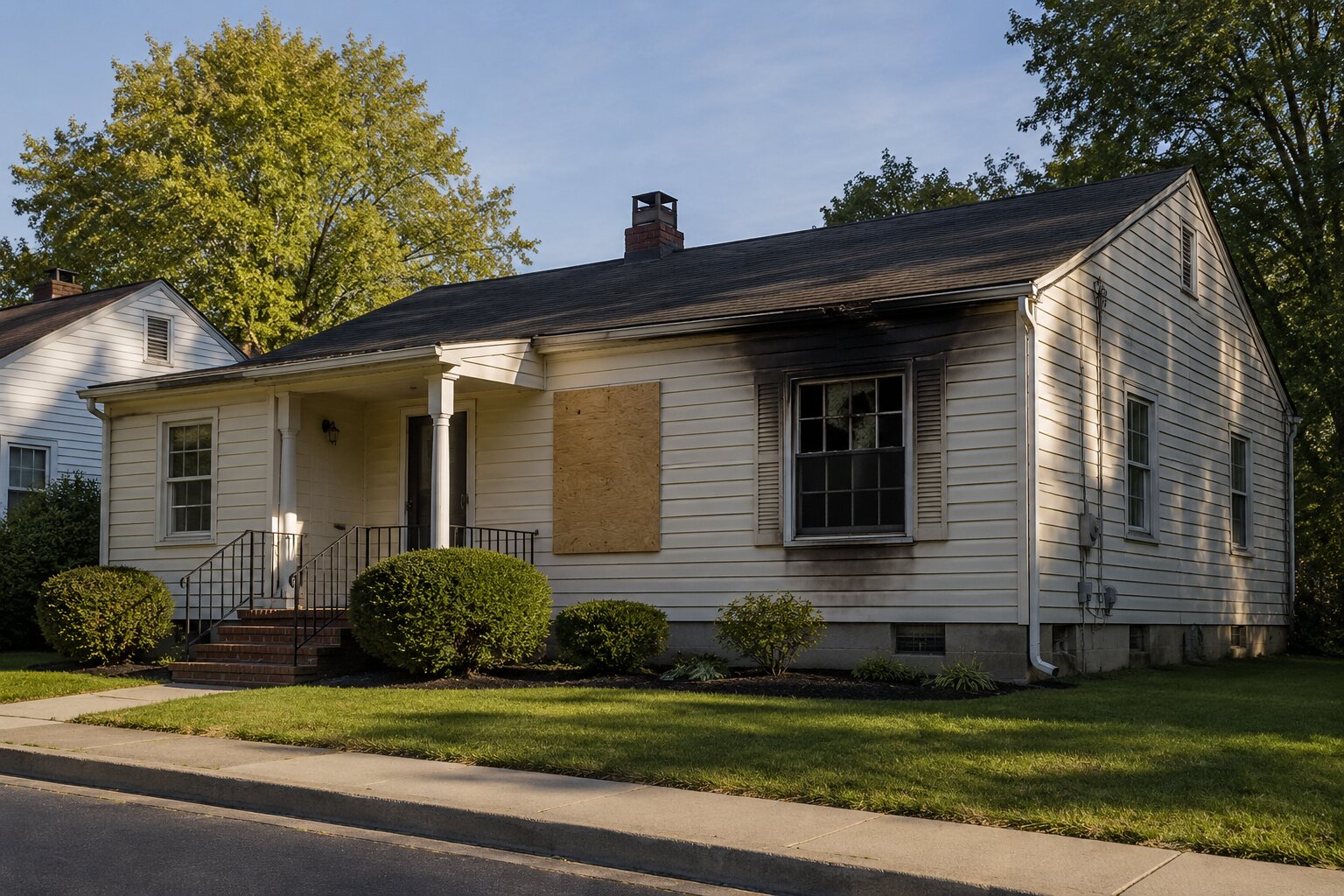
A compelling vision is not yet a strategy. Execution requires a correct diagnosis, measurable value-creation mechanism, control analysis, ordered work plan, realistic downside case, and transaction structure aligned with uncertainty.
Diagnose the constraint before prescribing the solution
Some of the most interesting opportunities are hidden inside properties other buyers dismiss quickly. Vacancy, deferred maintenance, weak operations, unusual layouts, fractured ownership, zoning constraints, and incomplete assemblages can all suppress current value.
But a complicated property is not automatically an undervalued one. Sometimes the problem is solvable. Sometimes it is expensive but manageable. Sometimes the obstacle destroys the investment thesis. The difference is execution.
When a property appears distressed or underutilized, it is tempting to jump directly to the transformation: renovate it, redevelop it, increase rents, convert the use, or combine it with neighboring parcels. I begin one level earlier. What is preventing the property from performing today?
- Physical: condition, systems, structure, or layout
- Operational: management, vacancy, collections, expenses, or records
- Legal and regulatory: title, zoning, licensing, violations, or approvals
- Capital: funding, debt cost, maturity pressure, or business-plan mismatch
- Stakeholder: tenants, owners, lenders, agencies, or adjacent parties
Define the value-creation mechanism
Once the constraint is understood, I identify the precise action that could create value. This matters because improving the property is too broad to underwrite. The mechanism must be measurable.
For an operating property, value may be created by increasing collected revenue, recovering allowable expenses, improving occupancy, or reducing recurring costs. For a development site, it may come from resolving access, securing a more valuable use, or assembling a functional footprint. For a vacant building, the opportunity may depend on selecting a feasible use, completing required improvements, and establishing stable operations.
The strategy should connect each action to an economic result: what changes, what it costs, how long it takes, what evidence supports the projected value, and which assumption has the greatest effect on the outcome.
A credible strategy must do more than describe what a property could become. It must explain how to get there.
Separate potential from control
One of the most important disciplines in complex transactions is distinguishing what is possible from what the investor can control. An investor can control the quality of diligence, the level of reserves, and which professionals are engaged. The investor may not control a zoning decision, utility extension, adjacent owner, public approval, or exact timing.
I classify major steps as directly controllable, influenceable but uncertain, or externally dependent. The less control an investor has over a critical assumption, the more carefully that assumption should be priced.
If the entire return depends on an externally controlled event, the acquisition may require a lower price, additional contingencies, phased closings, options, seller participation, or another structure that prevents the investor from carrying all the uncertainty upfront.
Build the sequence, not just the vision
A concept becomes executable when it is broken into a logical order. For a complex asset, that sequence might include confirming title, completing inspections, validating zoning, developing a scope, establishing financing, securing approvals, completing construction, obtaining licenses, initiating operations, and documenting performance.
The order is rarely interchangeable. Final construction pricing may depend on approved plans. Financing may depend on the intended use being legally viable. A refinance may require operating history. A development sale may require site control beyond the original parcel.
I build around dependencies first. Each stage should identify the required decision or deliverable, the responsible party, expected cost, estimated duration, evidence required to proceed, and consequence if the step is delayed or denied. This is where attractive ideas either become credible strategies or begin to fall apart.
Underwrite the problem and structure the uncertainty
Complex properties are often marketed based on the value they could have after every issue is resolved. That future value matters, but the investor is acquiring the current condition and accepting responsibility for closing the gap.
That gap may include construction, professional fees, approvals, carrying costs, leasing, management transition, and financing. I want to see a supportable base case, an upside case that does not rely on extraordinary outcomes, and a downside case that tests delays, higher costs, weaker revenue, or reduced exit value. A strategy is strongest when the downside remains survivable.
Not every problem should be solved through price alone. Depending on the circumstances, due-diligence conditions, an option, phased acquisition, seller financing, an earnout, or a partnership structure may allocate risk more intelligently. The larger principle is that capital should be exposed in proportion to certainty.
The highest-level work in a complex transaction is not creating the boldest vision. It is creating clarity around what is possible, what is probable, and what must be done next. The value is not in the problem itself. The value is in correctly diagnosing it, identifying the economic solution, and building a path that can actually be executed.
